
Mosaic Tiling
Mosaic sheets and pieces installed for detailed walls, splashbacks and suitable wet-area features.
Explore mosaic tilingStraight lines, balanced cuts and a sound background make the difference between a tiled wall that simply covers a surface and one that feels considered.
10/10 on Checkatrade · Checkatrade vetted
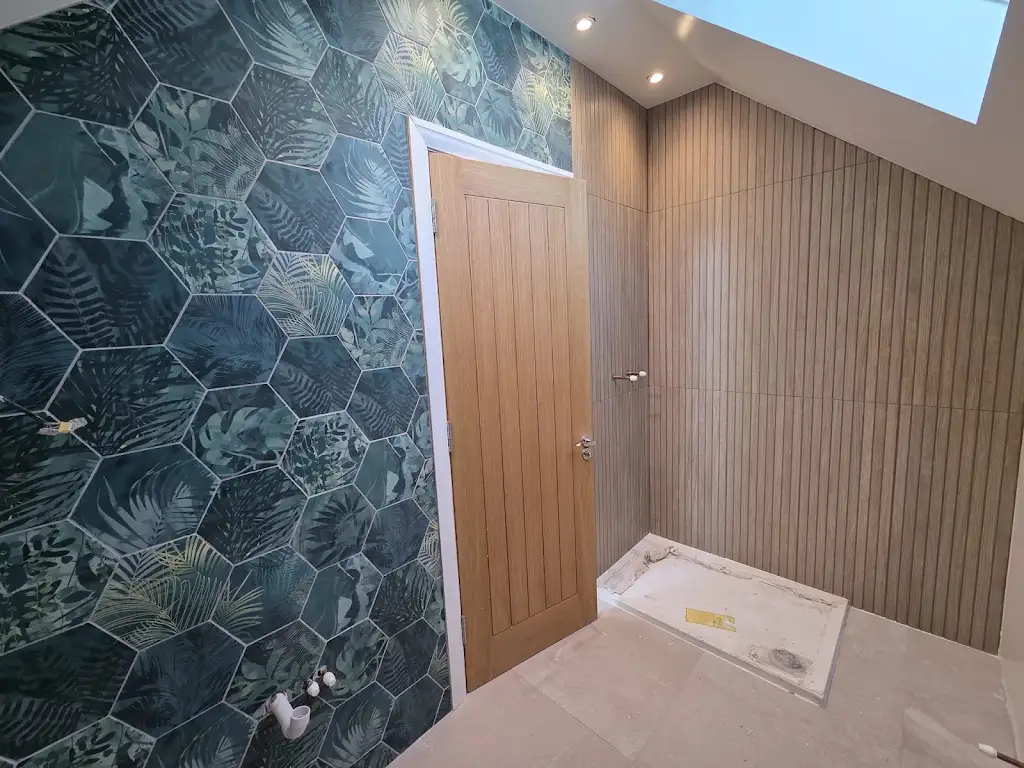
Wall tiling usually involves more detail than the square metres suggest. Corners, trims, sockets, windows, sanitaryware and changes in wall direction all feed into the setting-out plan, and KS Elite Tiling decides the most visible lines before any adhesive is mixed.
We fit ceramic, brick, mosaic, plain and slate tiles, across bathroom walls, kitchen splashbacks and jobs where old panelling comes off and tile goes on in its place. Each of those starts from a different background, and the background is what decides the preparation.
A tiled wall is only as good as what it is fixed to. We look for loose finishes, damaged boards, large deviations and recurring cracks, and we deal with them rather than covering them up. How much preparation that takes depends on the room, the tile and the state of the surface, so we price it once we have seen the wall.
We then set out where the full tiles and the cut tiles land. That accounts for eye-level features, edges, reveals and how the joints carry around a corner. With decorative or textured formats we work through the pattern and the shade variation as we fix, rather than opening boxes at random.
Mosaic gives you fine detail but brings a lot of joints and needs an even background to look right, so we check the wall before recommending it. Brick tiling sets a different rhythm and often uses a staggered pattern. Slate brings natural variation with it, and we show you what that means before you approve the layout.
We take tiles off as part of a full refresh or as a focused repair. Pulling a tile can reveal background damage or old adhesive that changes what comes next, so our quote states what preparation is included and how we will handle anything we uncover once the wall is open.
Plenty of the properties we work in have walls that are not straight or square, especially where they have been altered over the years. That does not stop the wall looking right, but it does mean we measure and talk it through with you before we start. The tile format and the grout width both affect how much of the variation you end up seeing.
Send clear photographs of the full wall along with close-ups of anything that looks like a problem: bulges, cracks, patched areas or tiles that have already lifted. We would rather know about those before we quote than find them on the first morning.
Look at the wall, measurements, tile choice and visible features.
Plan the key lines, cuts, corners, trims and pattern position.
Complete the agreed removal, repair or background preparation.
Install, grout, detail the edges and clean the working area.
A reliable quote needs the room, tile and preparation scope. These are the main factors to share.
Mosaic sheets and pieces installed for detailed walls, splashbacks and suitable wet-area features.
Explore mosaic tilingBrick-format and brick-effect tile installation for feature walls, splashbacks and other suitable areas.
Explore brick tilingSlate tile installation for suitable walls, floors and features, planned around natural shade and thickness variation.
Explore slate tilingRemoval of old or damaged wall and floor tiles, followed by an assessment of the background before replacement.
Explore tile removal and replacementCoverage depends on the project and schedule. Send the postcode with the room and tile details.
These are not assumed either way. They get priced and agreed with you before the work starts, so nothing turns into a surprise on the invoice.
Every project is different. These answers set expectations before the room and tiles are assessed.
Ceramic, porcelain, natural stone, mosaic, brick and slate are all fitted. Which one suits depends on the wall behind it and how much moisture and wear the room sees.
That decision needs an on-site assessment. Existing tiles must be sound, secure and suitable, and the extra thickness can affect trims, fittings and edges. Removal may be the better option in some rooms.
Often, provided a close tile match is available and the background has been left suitable for repair. Photographs of the opened area and spare tiles help with the first assessment.
Send a few photos, rough measurements and the tile you are looking at. Quotes are free, and most jobs can be priced from that without anyone coming out.